WHO GMP Certified Healthcare Tablets

medicine company franchise chandigarh
March 21, 2026
vitamin supplements for hair growth
May 7, 2026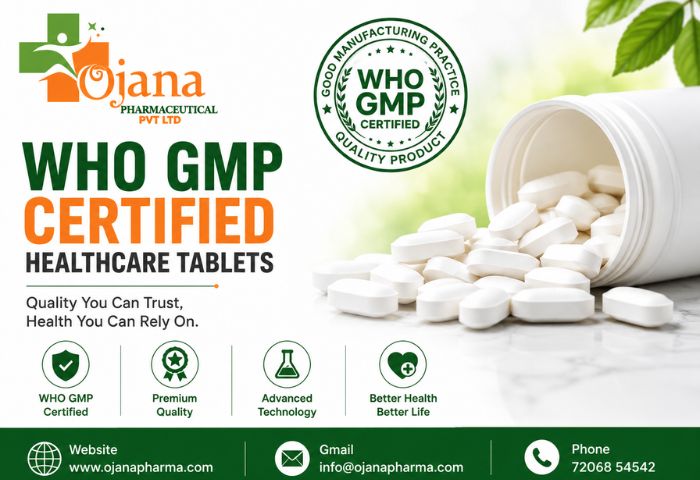
In the fast-moving world of modern medicine, the difference between a successful treatment and a health crisis often comes down to the manufacturing floor. As global healthcare demands rise, quality assurance has become the primary focus for doctors and patients alike. This is exactly why WHO GMP Certified Healthcare Tablets represent the gold standard for the pharmaceutical industry.
If you are a distributor, a healthcare provider, or an informed consumer, you must understand what this certification means. It is not just a sticker on a box. It is a rigorous, legally binding commitment to international safety and efficacy.
Decoding the WHO GMP Standard: More Than Just a Label
To understand the value of these products, we must first define the acronym. GMP stands for Good Manufacturing Practices. While many nations maintain local standards, the World Health Organization (WHO) created a global framework to harmonize these rules across borders.
A WHO GMP certification proves that a manufacturer consistently produces and controls every batch of medication according to world-class quality standards. This system targets the risks that final product testing cannot detect. By controlling the environment, the personnel, and the machinery, manufacturers eliminate the chance of contamination or dosage errors before they even happen.
The Anatomy of a High-Quality Tablet
Tablets are the most popular way to deliver medication, but they are incredibly difficult to make correctly. A single tablet must contain a precise amount of medicine, hold its shape during shipping, and dissolve at the exact right moment in the human body.
When you source WHO GMP Certified Healthcare Tablets, you are investing in a product that has passed through a “Validation” gauntlet. This means every step of the process—from mixing the powder to pressing the pill—follows a proven, scientific formula that never varies.
Why Quality Certification Matters
- Precision in Dosage: Patients receive the exact milligrams the doctor prescribed.
- Purity: The facility remains free from dust, microbes, and cross-contamination from other drugs.
- Stability: The medicine stays effective until the very last day of its shelf life.
The 10 Pillars of WHO GMP Manufacturing
To achieve this certification, a facility must excel in ten specific areas. These pillars ensure that the manufacturing environment remains sterile and efficient.
1. Trained Personnel
Employees must possess the right qualifications and undergo constant training. Even the way a staff member washes their hands or wears a hairnet impacts the safety of the tablets.
2. Sterile Premises
The building must prevent “cross-contamination.” This means the air from the room making Vitamin C must never mix with the room making Antibiotics.
3. Equipment Calibration
The machines that press thousands of tablets per minute require constant maintenance. If a machine loses its calibration, it might press a tablet too hard, preventing it from ever dissolving in the patient’s stomach.
4. Detailed Documentation
Every single batch of WHO GMP Certified Healthcare Tablets has a “biography.” This paper trail tracks every ingredient, the name of the worker who mixed it, and the temperature of the room during production.
5. Raw Material Verification
Quality starts with the ingredients. Manufacturers must test the Active Pharmaceutical Ingredient (API) for 99% purity before it ever enters the production line.
6. Environmental Controls (HVAC)
High-tech air filtration systems are mandatory. These systems use HEPA filters to scrub the air, ensuring that no microscopic particles land on the medication. You can learn more about these global requirements by visiting the World Health Organization’s official manufacturing standards.
7. In-Process Quality Control (IPQC)
Technicians don’t wait until the end to check the quality. Every 30 minutes, they pull tablets off the line to check their weight, thickness, and hardness.
8. Packaging and Labeling
The labels must be clear and accurate. Wrong labels lead to medication errors, which can be fatal. GMP standards ensure that the right label goes on the right bottle every time.
9. Internal Audits
A certified company must audit itself. They look for weaknesses in their own system and fix them before an official inspector ever arrives.
10. Complaint Handling and Recalls
Even the best manufacturers must have a plan for mistakes. WHO GMP requires a fast, effective system to pull products off the market if a defect is discovered.
The Global Impact: A Passport to International Trade
For pharmaceutical companies, the WHO GMP certificate is more than a safety document; it is a “passport.” Most regulatory bodies in Africa, Southeast Asia, and Latin America require a Certificate of Pharmaceutical Product (COPP) based on WHO standards before they allow an import.
Benefits for Distributors and Pharmacies
If you run a pharmacy or a distribution hub, stocking WHO GMP Certified Healthcare Tablets protects your business.
- Reduced Recalls: High-quality manufacturing means you won’t have to deal with the logistical nightmare of returning defective batches.
- Customer Trust: Modern patients are educated. When they see the GMP seal, they feel safe.
- Legal Security: Selling certified products ensures you comply with local health laws, reducing your liability.
Technical Rigor: Understanding IPQC and Stability
Let’s dive deeper into the science. How does a manufacturer prove a tablet is good? They use three main tests during the “In-Process Quality Control” (IPQC) phase:
- Weight Variation: If one tablet is 500mg and the next is 510mg, the machine is failing. Precision is the goal.
- Friability: This tests how much “dust” a tablet sheds when it bumps into other tablets. If it’s too crumbly, the patient won’t get the full dose.
- Disintegration Time: A tablet must break down in water or stomach acid within a specific number of minutes. If it’s as hard as a rock, it’s useless.
Furthermore, WHO GMP Certified Healthcare Tablets undergo “Stability Testing.” Lab experts place the tablets in “Stability Chambers” that mimic extreme heat and humidity. This proves the medicine will still work in a tropical climate or a humid warehouse.
Debunking Common Myths
Myth 1: Certified Tablets Are Too Expensive
While the initial price might be slightly higher, the “cost of quality” is actually a saving. Think about the cost of a lawsuit, a product recall, or a lost reputation. In the long run, GMP-certified products are the most cost-effective choice for any healthcare system.
Myth 2: All Manufacturers Follow These Rules Anyway
Unfortunately, this is false. Many “local” standards allow for lower air filtration quality or less frequent equipment testing. Only the “WHO” prefix guarantees that the standards meet international requirements for global trade.
How to Verify a Manufacturer’s Credentials
Because counterfeit certificates exist, you must do your homework.
- Check the Date: WHO GMP certificates usually expire after two or three years. Always ask for the most recent renewal.
- Scan the Product List: A company might be certified to make liquids but not tablets. Ensure the “Tablet” section is explicitly mentioned on the certificate.
- Request an Audit Report: Serious buyers often ask for a summary of the latest inspection to ensure there were no “Critical Observations.”
The Role of Modern Technology in GMP
The industry is changing. Today, the best WHO GMP Certified Healthcare Tablets are made using:
- Automated Granulation: This removes human error and reduces the risk of skin cells or hair falling into the mix.
- LIMS (Laboratory Information Management System): This is a digital software that records every test result. Because it is digital, no one can “change” a failing grade to a passing one.
- High-Speed Rotary Presses: These machines use sensors to automatically reject any tablet that is too light or too heavy.
Conclusion: Prioritizing Human Life
In the pharmaceutical world, there is no such thing as “good enough.” Every tablet represents a person’s health, a child’s recovery, or a senior’s quality of life. WHO GMP Certified Healthcare Tablets are the foundation of a safe global medical system.
By insisting on these standards, manufacturers, doctors, and distributors send a clear message: safety comes before profit. As we look toward the future of medicine, these rigorous guidelines will remain the bedrock of pharmaceutical integrity, ensuring a healthier world for everyone.
Are you ready to elevate your supply chain? Always verify that your partners prioritize WHO GMP standards to ensure that every patient receives the care they deserve.