Vitamin D3 U.S.P. 60,000 IU: Uses, Dosage, Side Effects and Safety Guide

Amoxycillin I.P. 200 mg + Clavulanic Acid I.P. 28.5 mg (Dry Syrup): Uses, Dosage, Side Effects and Safety Guide
October 12, 2026
Natural Micronized Progesterone I.P. 100mg Softgel in Drug: Uses, Dosage, Side Effects and Safety Guide
October 13, 2026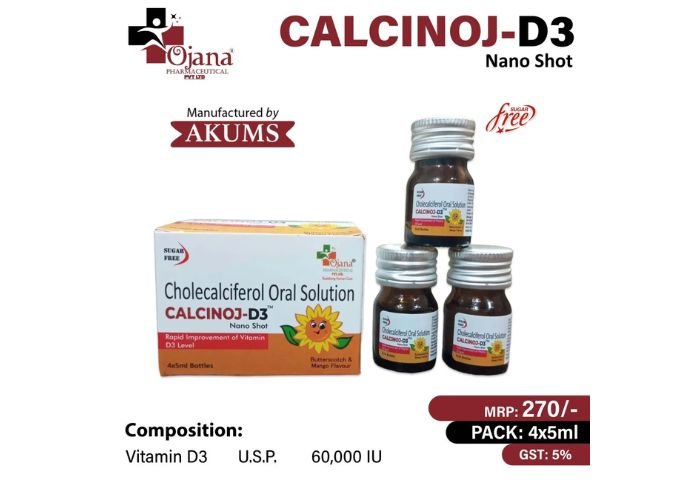

Constant tiredness, bone pain, muscle weakness and frequent illness often point to one hidden problem: low vitamin D. Doctors across India prescribe Vitamin D3 U.S.P. 60,000 IU to correct this deficiency quickly and safely. This guide explains how the supplement works, when doctors recommend it, how to take it, and which warnings matter. It also shows pharma entrepreneurs why this product belongs in the range of a reliable PCD pharma franchise company in India.
Quick Facts at a Glance
| Detail | Information |
| Active ingredient | Cholecalciferol (Vitamin D3) U.S.P. |
| Strength | 60,000 IU |
| Common forms | Soft gel capsule, chewable tablet, granules sachet and oral nano shot |
| Main use | Vitamin D deficiency and bone health |
| Usual schedule | Once a week, as the doctor directs |
| Best taken | With a meal that contains some fat |
What Is Vitamin D3 U.S.P. 60,000 IU?
Vitamin D3, also called cholecalciferol, is the form of vitamin D that your skin makes in sunlight. It is also the most effective form in supplements. The “U.S.P.” mark means the ingredient meets the standards of the United States Pharmacopeia.
A 60,000 IU product is a high-dose, weekly supplement. It is not a daily vitamin. Doctors use it to refill the body’s vitamin D stores fast when a blood test shows deficiency.
How Does Vitamin D3 Work?
Vitamin D acts like a hormone. Your liver and kidneys convert it into its active form, which then performs several key jobs:
- It helps absorb calcium and phosphorus from food in the gut.
- It builds and maintains strong bones and teeth.
- It supports muscle strength and balance.
- It supports the immune system in fighting infections.
When vitamin D runs low, the body absorbs less calcium. Bones then weaken, and muscles ache. A weekly 60,000 IU dose restores the levels over several weeks.
Uses of Vitamin D3 U.S.P. 60,000 IU
Doctors prescribe this supplement for:
- Vitamin D deficiency: confirmed by a low blood level.
- Rickets in children: soft, weak bones from long-term deficiency.
- Osteomalacia in adults: bone softening with pain and weakness.
- Osteoporosis: as part of treatment alongside calcium.
- Muscle pain and weakness linked to low vitamin D.
- Pregnancy and lactation needs: only under medical advice.
- Poor absorption conditions: such as long-term gut or liver disease, when the doctor advises.
- Limited sun exposure: for people who stay indoors or cover their skin.
This supplement corrects deficiency. It does not replace a balanced diet, sunlight and exercise.
Why Is Vitamin D Deficiency So Common in India?
The numbers explain the huge demand:
- Researchers estimate that around one billion people worldwide have low vitamin D levels.
- Indian studies report vitamin D deficiency in roughly 70 to 90 percent of the population, depending on the age group and the cut-off value used.
- Deficiency appears even in sunny regions, because of indoor work, pollution, dark skin pigment, sunscreen use and clothing habits.
- Women, older adults, office workers and urban children show especially high rates.
- India is among the largest pharmaceutical producers by volume, and its domestic market has crossed the US$50 billion mark in annual value.
Publisher’s note: please refresh these figures with the latest 2026 studies, ICMR data and IBEF reports before you publish.
Dosage of Vitamin D3 U.S.P. 60,000 IU
Only a doctor should set the dose after checking the blood level. A common adult routine is:
- One 60,000 IU dose once a week, usually for eight weeks, to treat deficiency.
- Followed by a maintenance dose, such as one dose every month or a lower daily dose, as the doctor decides.
- Doctors adjust the schedule for children, older adults and people with other medical conditions.
Important dosing points
- Take the dose with or after a meal that contains some fat, because vitamin D dissolves in fat and absorbs better that way.
- Take it on the same day each week, and set a phone reminder.
- Swallow capsules whole. Dissolve granules or nano shots as the label directs.
- Do not take daily vitamin D tablets or other high-dose products on top of it without asking your doctor.
- If you miss a weekly dose, take it when you remember, then return to your usual day. Never double up.
- Recheck your vitamin D level after the course, as your doctor advises.
Side Effects of Vitamin D3 U.S.P. 60,000 IU
Vitamin D3 is safe at the prescribed dose. Problems usually appear only with too much, taken for too long.
Possible mild effects
- Nausea
- Constipation or stomach upset
- Loss of appetite
- Mild headache
Signs of too much vitamin D (see a doctor immediately)
- Excessive thirst and frequent urination
- Vomiting and severe stomach pain
- Muscle weakness and confusion
- Unusual tiredness or drowsiness
- Irregular heartbeat
- Kidney stone pain
Key warning: Excess vitamin D raises calcium in the blood (hypercalcaemia). This condition can damage the kidneys and heart. Never take vitamin D beyond the dose and duration your doctor sets.
Who Should Take Care?
Do not use Vitamin D3 U.S.P. 60,000 IU if you:
- Have high blood calcium (hypercalcaemia)
- Have a known vitamin D toxicity
- Are allergic to any ingredient in the product
Talk to your doctor before use if you:
- Have kidney stones or kidney disease
- Have sarcoidosis, tuberculosis or certain lymphomas
- Have hyperparathyroidism
- Have heart disease
- Are pregnant or breastfeeding
- Plan to give it to an infant or a child
- Take calcium supplements in high doses
Drug Interactions to Know
Vitamin D3 may interact with:
- Thiazide diuretics, which can raise blood calcium further
- Digoxin, where high calcium may increase the risk of heart rhythm problems
- Corticosteroids, which can reduce vitamin D’s effect
- Orlistat and cholestyramine, which reduce its absorption
- Phenytoin, phenobarbital and rifampicin, which can speed up vitamin D breakdown
- High-dose calcium supplements, which raise the risk of excess calcium
Always give your doctor a full list of the medicines and supplements you use.
Natural Ways to Support Vitamin D Levels
- Spend about fifteen to twenty minutes in morning sunlight a few times a week, when it is safe for your skin.
- Include fatty fish, egg yolks, fortified milk and fortified cereals in your meals.
- Eat calcium-rich foods such as milk, curd, paneer, ragi and leafy greens.
- Stay active, with weight-bearing exercise such as walking.
- Maintain a healthy weight.
- Get a vitamin D blood test if you have symptoms or risk factors.
How to Choose from the Top 10 PCD Pharma Franchise Companies in India
Many entrepreneurs search for the top 10 PCD pharma franchise companies in India before they start. A ranking alone does not guarantee quality, so judge each company on facts. Use this checklist:
- Valid licences: the company must hold a current manufacturing licence and WHO-GMP or GMP certification.
- Product range: look for a broad catalogue covering vitamins, supplements, pain, gastro, antibiotic and paediatric products.
- Formulation quality: check dose accuracy, stability and clear label claims.
- Minimum order quantity: choose a company with a low MOQ to limit your investment.
- Territory rights: insist on monopoly rights in your district or state.
- Marketing support: check for visual aids, literature and promotional tools.
- Delivery and payment terms: confirm on-time dispatch and clear terms.
- Reputation: speak with current franchise partners.
Why Vitamin D3 U.S.P. 60,000 IU Suits a PCD Pharma Franchise Company in India
Vitamin D is one of the most prescribed supplements in the country. Physicians, orthopaedic doctors, gynaecologists and paediatricians recommend it every day, and patients return for repeat courses and maintenance doses. That pattern gives distributors steady, year-round orders.
A dependable PCD pharma franchise company in India gives its partners exclusive territory rights, GMP-certified products, low MOQs, competitive pricing and marketing support. These benefits help a new distributor build a strong nutrition and supplement range.
Frequently Asked Questions (FAQs)
1. What is Vitamin D3 U.S.P. 60,000 IU used for?
Vitamin D3 U.S.P. 60,000 IU treats vitamin D deficiency and supports bone and muscle health. In 2026, doctors in India still prescribe it widely for deficiency, rickets, osteomalacia and osteoporosis.
2. How often should I take Vitamin D3 U.S.P. 60,000 IU?
Doctors usually prescribe one dose of Vitamin D3 U.S.P. 60,000 IU once a week, often for eight weeks. Current 2026 guidance still stresses that the doctor sets the schedule from your blood test result.
3. What are the side effects of Vitamin D3 U.S.P. 60,000 IU?
Vitamin D3 U.S.P. 60,000 IU is safe at the prescribed dose, but overuse can cause nausea, thirst, frequent urination and high blood calcium. Seek urgent medical care if these signs appear.
4. Can I take Vitamin D3 U.S.P. 60,000 IU daily?
No. Vitamin D3 U.S.P. 60,000 IU is a weekly dose, and daily use can lead to toxicity. In 2026, doctors still warn against taking it every day unless a doctor specifically prescribes that.
5. Should I take Vitamin D3 U.S.P. 60,000 IU with food?
Yes. Take Vitamin D3 U.S.P. 60,000 IU with a meal that contains some fat, because this improves absorption. Current 2026 patient guidance still recommends it.
6. Is Vitamin D3 U.S.P. 60,000 IU safe during pregnancy?
Doctors prescribe it in pregnancy only when needed and at a controlled dose. In 2026, the standard advice remains to consult your doctor before taking Vitamin D3 U.S.P. 60,000 IU.
7. Is Vitamin D3 U.S.P. 60,000 IU a good product for the top 10 PCD pharma franchise companies in India?
Yes. Vitamin D3 U.S.P. 60,000 IU enjoys strong, year-round demand in the 2026 nutrition segment. A GMP-certified PCD pharma franchise company in India can supply it with reliable quality.
Conclusion
Vitamin D3 U.S.P. 60,000 IU restores low vitamin D levels quickly and supports strong bones, muscles and immunity. Patients get the best results when they take the weekly dose with food, follow the doctor’s schedule and recheck their levels. For pharma entrepreneurs, this high-demand supplement is a smart addition to the range of a trusted PCD pharma franchise company in India.
Disclaimer: This article is for information only and does not replace professional medical advice. Please consult a qualified doctor before using any medicine or supplement.