Faropenem (300mg): Uses, Benefits, Dosage and PCD Franchise Opportunity

Faropenem (200mg): Uses, Benefits, Dosage and PCD Franchise Opportunity
October 16, 2026
Bilastine 20mg + Montelukast Sodium I.P. 10mg: Uses, Benefits, Dosage and PCD Franchise Opportunity
October 16, 2026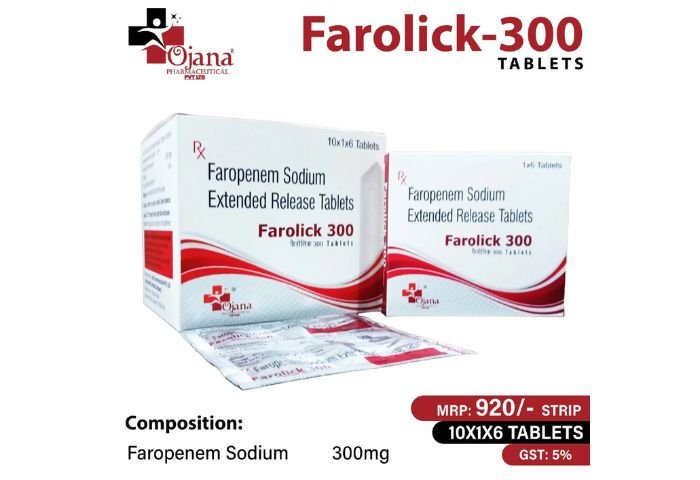

A persistent chest infection, a stubborn sinus problem, or a recurring urinary infection can wear a patient down. When common antibiotics fail, doctors turn to stronger oral options that still work against resistant bacteria. Faropenem (300mg) is an oral penem antibiotic that doctors prescribe for moderate bacterial infections. This guide explains how it works, where doctors use it, and which safety rules matter. It also shows why this product attracts distributors who want to join a PCD pharma franchise company in India.
What Is Faropenem (300mg)?
Faropenem is an oral penem antibiotic from the beta-lactam family, the same broad family as penicillins and cephalosporins. Bacteria produce beta-lactamase enzymes to destroy many common antibiotics. Penems resist many of these enzymes, so they keep working where simpler drugs fail.
The 300 mg tablet gives doctors a higher-strength option. They choose it when an infection needs stronger coverage or when a patient fits a higher-dose schedule.
How Does Faropenem Work?
Bacteria need a strong cell wall to survive. Faropenem binds to proteins in the bacterial cell wall and blocks wall construction. The wall weakens, and the bacterium dies.
Faropenem stays stable against many beta-lactamase enzymes. It acts on a wide range of Gram-positive and Gram-negative bacteria and on some anaerobes. This breadth makes it useful when an infection involves more than one organism.
Key Uses of Faropenem (300mg)
Doctors prescribe Faropenem for bacterial infections such as:
- Acute bacterial sinusitis
- Acute flare-ups of chronic bronchitis
- Community-acquired pneumonia
- Urinary tract infections
- Skin and soft tissue infections
- Ear, nose, and throat infections
- Gynaecological infections
Antibiotics work only against bacteria. They do not treat colds, flu, or other viral illnesses.
Benefits at a Glance
| Benefit | What It Means for the Patient |
| Oral penem | Offers a strong option without injections |
| Beta-lactamase stability | Works against many resistant bacteria |
| Broad coverage | Acts on several common infection-causing organisms |
| Higher strength | Gives doctors a flexible dosing choice |
| Familiar class | Doctors understand beta-lactam safety and use well |
Usual Dosage and How to Take It
A doctor sets the dose after checking the infection type, severity, and kidney function. In general:
- Adults take the tablet exactly as prescribed, often once or twice daily.
- Patients take it after food to reduce stomach upset.
- Patients finish the full course even when symptoms improve.
- Doctors adjust the dose for patients with kidney problems.
Stopping early lets surviving bacteria multiply and grow resistant. Patients should never share antibiotics or save leftover tablets.
Why Antibiotic Stewardship Matters
Antimicrobial resistance (AMR) is a serious public health problem in India and worldwide. Overuse and misuse of antibiotics speed it up. Doctors therefore reserve stronger antibiotics for cases that need them and confirm the need for treatment before prescribing.
Franchise partners share this responsibility. Promote Faropenem responsibly, give accurate prescribing information, and never encourage use without a prescription.
Safety Information You Should Know
Honest safety messaging builds trust with doctors and patients.
Common side effects
- Diarrhoea
- Nausea or vomiting
- Abdominal discomfort
- Headache
- Skin rash
Serious but rare effects (seek medical help at once)
- Severe or bloody diarrhoea
- Swelling of the face, lips, or throat
- Breathing difficulty
- Seizures
- Severe skin reactions
Who should avoid it
- People allergic to penicillins, cephalosporins, or other beta-lactams
- Patients with a history of severe antibiotic reactions
- Patients taking valproic acid, unless the doctor confirms it is safe
Key precautions
- Tell your doctor about allergies and all current medicines.
- Consult a doctor before use during pregnancy or breastfeeding.
- Patients with kidney disease need a dose review.
- Report severe diarrhoea at once, because antibiotics can trigger C. difficile infection.
This medicine needs a prescription. Self-medication carries real risk.
Meet Farolick-300 | Ojana Pharmaceutical
Farolick-300 | Ojana Pharmaceutical brings this higher-strength antibiotic to franchise partners. It enters the anti-infective segment, one of the largest therapy areas in India.
Why does this product suit distributors?
- Constant demand. Infections occur in every season, and cases rise during monsoon and winter.
- Wide prescriber base. Physicians, ENT specialists, pulmonologists, urologists, and gynaecologists all treat infections.
- Fast repeat cycles. Short antibiotic courses move stock quickly through chemist shops.
- Clear clinical need. Rising resistance pushes doctors to seek reliable options.
India’s Pharma Market: Current Picture
The Indian pharmaceutical industry keeps expanding, which creates room for new franchise partners. Industry sources report these trends:
- India ranks third worldwide in pharmaceutical production by volume.
- India supplies a large share of the world’s generic medicines.
- The domestic market stands at roughly USD 50 billion, and industry and government bodies target about USD 130 billion by 2030.
- Anti-infectives rank among the largest therapy groups in the Indian market.
- Antimicrobial resistance remains a top national health concern, and regulators push for responsible antibiotic use.
Note: Market figures change every year. Verify the latest numbers on IBEF, the Department of Pharmaceuticals, ICMR, or IQVIA before you publish.
Why Join a PCD Pharma Franchise Company in India?
A PCD pharma franchise company in India allows you to market branded medicines in your own territory. PCD means Propaganda Cum Distribution. You promote the company’s products, handle local sales, and build your own business identity.
Advantages of the PCD model
- Low investment compared with a manufacturing unit
- Exclusive territory rights in many cases
- Ready product range with approved formulations
- Promotional support such as visual aids and literature
- Freedom to build your own doctor network
- Scalable income as your territory grows
This model suits medical representatives, chemists, distributors, and first-time entrepreneurs.
How to Choose from the Top 10 PCD Pharma Franchise Companies in India
Buyers often search for the top 10 PCD pharma franchise companies in India before they commit. No official ranking exists, so judge each company on facts. Use this checklist:
- Valid licences. Confirm a drug manufacturing licence.
- GMP certification. WHO-GMP status signals quality discipline.
- Product range. Look for strong anti-infective, pain, gastro, and cardiac segments.
- Quality control. Request batch reports and quality policies.
- Territory protection. Ask whether the company guarantees monopoly rights.
- Promotional support. Check samples, literature, and training.
- Supply terms. Quick delivery keeps your market loyal.
- Reputation. Speak with existing franchise partners.
- Margins. Compare trade margins across companies.
- Clear agreement. Read every clause before you sign.
A company that meets most of these points deserves a place on your shortlist.
Tips to Succeed with Faropenem (300mg) in Your Territory
- Target the right doctors. Prioritise physicians, ENT specialists, pulmonologists, and urologists.
- Explain the benefit simply. Say “oral penem with beta-lactamase stability.”
- Stress responsible use. Mention full-course completion and prescription-only use.
- Support your chemists. Timely stock builds lasting trust.
- Follow up on prescribers. Regular visits turn trial into habit.
Frequently Asked Questions (FAQs)
Q1. What is Faropenem (300mg) used for in 2026?
In 2026, doctors continue to prescribe Faropenem (300mg) for bacterial sinusitis, bronchitis flare-ups, pneumonia, urinary tract infections, and skin infections. It works only against bacteria, not viruses.
Q2. How should patients take Faropenem (300mg)?
Patients should take Faropenem (300mg) exactly as their doctor directs, usually after food, and finish the full course. Current 2026 stewardship guidance warns against stopping early or sharing tablets.
Q3. Is Faropenem (300mg) a prescription medicine in India?
Yes. In 2026, Faropenem (300mg) remains a prescription antibiotic in India. Chemists should dispense it only against a valid prescription.
Q4. What are the common side effects of Faropenem (300mg)?
Users in 2026 may notice diarrhoea, nausea, abdominal discomfort, headache, or rash with Faropenem (300mg). Patients should contact a doctor if symptoms continue or worsen.
Q5. Who should avoid Faropenem (300mg)?
Safety guidance in 2026 tells people with allergy to penicillins, cephalosporins, or other beta-lactams to avoid Faropenem (300mg). Pregnant and breastfeeding women should consult a doctor first.
Q6. What is Farolick-300 by Ojana Pharmaceutical?
Farolick-300 | Ojana Pharmaceutical is a branded tablet that contains Faropenem (300mg). The company offers it to franchise partners who want an anti-infective product in their range.
Q7. Why is Faropenem (300mg) a good product for a PCD franchise?
Demand for anti-infectives stays strong in 2026 as the Indian pharma market moves toward its USD 130 billion target for 2030. Faropenem (300mg) gives a PCD pharma franchise company in India a reliable, repeat-prescription product.
Q8. How do I choose among the top 10 PCD pharma franchise companies in India for Faropenem (300mg)?
Check licences, GMP certification, territory rights, and batch quality reports. In 2026, choose a company that supplies Faropenem (300mg) with transparent terms and reliable delivery.
Final Thoughts
Faropenem (300mg) gives doctors a higher-strength oral penem option for bacterial infections, and its beta-lactamase stability adds value. For entrepreneurs, Farolick-300 | Ojana Pharmaceutical opens a strong path into the anti-infective segment. Pick your franchise partner with care, verify every claim, and promote the product with responsible, prescription-only messaging.
Disclaimer: This article provides general information only. It does not replace professional medical advice. Always consult a qualified doctor before you use any medicine.