Pain Management & Orthopedic Products

Antibiotic Medicines List: Types, Uses and Common Antibiotic Tablets & Syrups
November 16, 2026
Understanding Pharmaceutical Formulations: From Antibiotic Combinations to Advanced Skin Care Products
November 17, 2026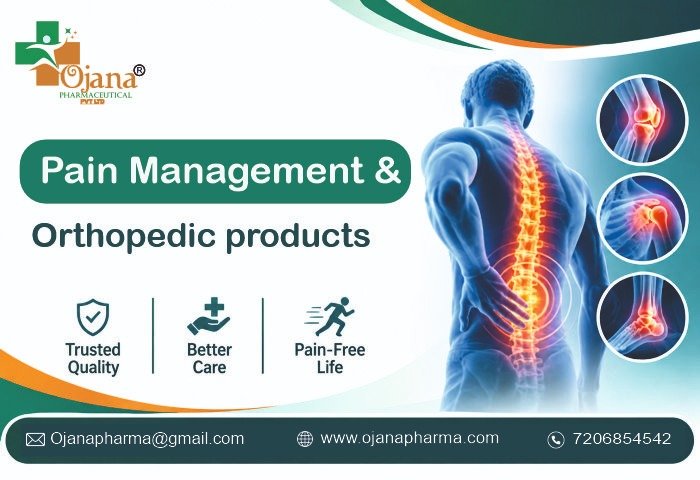
Pain Management & Orthopedic Products matter because back pain, knee pain and muscle spasm send more people to the clinic than almost any other complaint. The right medicine can restore movement, but the wrong one can harm the stomach, kidneys or heart. That is why doctors choose pain tablets by cause, duration and patient risk, not by habit. This guide explains the main Pain Management & Orthopedic Products in plain language. It compares four tablets, shows 2026 burden data, lists safety rules and explains what to check when you work with a PCD pharma franchise Company in India.
Why Musculoskeletal Pain Needs Attention
Musculoskeletal disorders affect bones, joints, muscles and tendons. The numbers show how common they are:
- The Global Burden of Disease 2021 analysis reports that musculoskeletal disorders affect over 1.63 billion people worldwide.
- Low back pain remains the leading cause of disability across the world, and it accounted for 64.9 million disability-adjusted life years in 2020.
- India’s COPCORD survey of 56,548 people found that 16.14% of the population lives with musculoskeletal pain. Rural residents and women carry a higher share.
- The same survey put osteoarthritis prevalence at 4.39%, while a five-site community study found knee osteoarthritis in 28.7% of participants.
- Among older Indian adults in the LASI survey, 41.9% reported joint pain and 32.6% reported back pain.
- Studies of low back pain in India report prevalence anywhere from 42% to 83%, a gap that reflects different survey methods.
Age, obesity, desk work and heavy manual labour all raise risk. India’s domestic pharma market stands near USD 60 billion in 2026, and pain therapy forms a steady part of it.
How Pain Tablets Work
Four drug types appear in most orthopedic prescriptions:
| Drug type | Example | What it does |
| NSAID | Aceclofenac, Etoricoxib | Reduces inflammation and pain by blocking prostaglandin production |
| Analgesic-antipyretic | Paracetamol | Eases pain and lowers fever, with little anti-inflammatory effect |
| Muscle relaxant | Thiocolchicoside | Relieves painful muscle spasm |
| Sustained-release NSAID | Aceclofenac SR | Releases the drug slowly for longer coverage |
Doctors combine drugs when one cause needs two actions, such as inflammation plus spasm. They avoid combinations when a single drug will do.
Four Pain Management Tablets Compared
Each name opens a product page. All four are prescription medicines.
| Product | Combination | Typical use | Point to remember |
| Aceclofenac Paracetamol Tablets (Aceclofenac I.P. 100 mg + Paracetamol I.P. 325 mg) | NSAID with analgesic | Toothache, sprain, joint pain, post-injury pain | Avoid other paracetamol products at the same time |
| Aceclofenac Thiocolchicoside Tablets (Aceclofenac I.P. 100 mg + Thiocolchicoside 4 mg) | NSAID with muscle relaxant | Painful muscle spasm in neck or back | Short courses only; avoid in pregnancy |
| Aceclofenac 200mg SR Tablets (Aceclofenac 200 mg SR) | Sustained-release NSAID | Long-term joint pain such as osteoarthritis | Swallow whole; do not crush or chew |
| Etoricoxib Thiocolchicoside Tablets (Etoricoxib 60 mg + Thiocolchicoside 4 mg I.P.) | COX-2 selective NSAID with muscle relaxant | Acute low back pain with spasm | Doctors check blood pressure and heart history first |
Aceclofenac Paracetamol Tablets
This combination suits general pain with mild to moderate inflammation. Aceclofenac lowers inflammation, and paracetamol adds pain relief through a different route. Patients must count every paracetamol source they use, including cold remedies, because excess paracetamol harms the liver.
Aceclofenac Thiocolchicoside Tablets
Muscle spasm often follows a strain or a long period in a fixed posture. This pairing treats both the inflammation and the tight muscle. European regulators advised short courses of thiocolchicoside and warned against use in pregnancy and breastfeeding, and Indian prescribers follow the same caution.
Aceclofenac 200mg SR Tablets
The sustained-release design spreads the dose over many hours, so patients with chronic joint pain take fewer doses a day. Doctors use it in osteoarthritis, rheumatoid arthritis and ankylosing spondylitis. Because release is slow, chewing or crushing the tablet defeats the design.
Etoricoxib Thiocolchicoside Tablets
Etoricoxib selectively blocks COX-2, an enzyme that drives inflammation. Doctors prefer it for acute flares with spasm, such as sudden low back pain. It can raise blood pressure, so it does not suit patients with uncontrolled hypertension or established heart disease or stroke.
Who Should Take Extra Care
NSAIDs help many patients, yet they carry real risks. Doctors take extra care in these groups:
- People with stomach ulcers or a history of gastrointestinal bleeding
- Patients with kidney disease or dehydration
- Patients with heart disease, stroke or high blood pressure
- Pregnant women, especially in the third trimester
- Older adults who take several medicines
Patients should also tell their doctor about asthma triggered by aspirin, blood thinners and any other pain medicine they use.
Safe Use Rules for Patients
- Use the lowest effective dose for the shortest time. Your doctor sets the limit.
- Take tablets after food unless the label says otherwise, to protect the stomach.
- Never combine two NSAIDs. Double dosing raises bleeding and kidney risk.
- Stay hydrated. Good fluid intake supports the kidneys.
- Stop and call a doctor if you notice black stools, severe stomach pain, swelling of the face, breathlessness or reduced urine.
- Do not self-extend a course. Persistent pain needs a fresh medical review.
Care Beyond Tablets
Medicine relieves symptoms, but movement and habits fix the cause. Orthopaedic and physiotherapy guidance usually includes:
- Gentle stretching and strengthening for the back and core
- Weight reduction when body weight strains the knees or spine
- Regular breaks from long sitting
- Heat or cold packs, as advised
- Proper lifting technique for manual work
Seek urgent care for pain after a serious fall, pain with fever, numbness in the legs, loss of bladder or bowel control, or pain that wakes you at night and keeps worsening.
What Distributors Should Check
Pain tablets sell steadily because clinic demand never stops. That makes quality checks even more important. Whether you stock products directly or work with a PCD pharma franchise Company in India, verify these points:
- Licences and certificates. Ask for the manufacturing licence and a GMP or WHO-GMP certificate.
- Batch reports. Confirm that every batch carries a certificate of analysis.
- Clear labelling. Strength, composition and warnings must appear on the pack.
- Storage. Keep tablets in a cool, dry place away from direct sunlight.
- Honest promotion. Present only the claims that product literature supports, and share safety information with doctors.
Ojana Pharmaceutical publishes composition details for all four products above, which gives distributors a clear reference when they compare suppliers.
This article is for general information only. It is not medical advice. A qualified doctor must decide the choice and duration of any pain medicine.
Frequently Asked Questions
1. What are Aceclofenac Paracetamol Tablets used for?
Aceclofenac Paracetamol Tablets treat pain with mild to moderate inflammation, such as sprains, toothache and joint pain. India’s COPCORD survey shows that 16.14% of people live with musculoskeletal pain, so such combinations see regular use.
2. Can I take Aceclofenac Thiocolchicoside Tablets for a long time?
No. Aceclofenac Thiocolchicoside Tablets suit short courses because thiocolchicoside carries duration limits. Pregnant and breastfeeding women should avoid it. A PCD pharma franchise Company in India should state these cautions clearly in its product literature.
3. What makes Aceclofenac 200mg SR Tablets different from regular aceclofenac?
Aceclofenac 200mg SR Tablets release the drug slowly, so patients take fewer doses a day. In 2026, with 41.9% of older Indian adults reporting joint pain in the LASI survey, sustained-release options help many chronic cases. Patients must swallow the tablet whole.
4. Who should avoid Etoricoxib Thiocolchicoside Tablets?
Patients with uncontrolled high blood pressure, established heart disease or stroke should avoid Etoricoxib Thiocolchicoside Tablets. Pregnant women should avoid them as well. Doctors check blood pressure before they prescribe etoricoxib.
5. How common is low back pain, and which tablets help, such as Aceclofenac Thiocolchicoside Tablets or Etoricoxib Thiocolchicoside Tablets?
Studies place low back pain prevalence in India between 42% and 83%, depending on the survey method. Doctors may use Aceclofenac Thiocolchicoside Tablets or Etoricoxib Thiocolchicoside Tablets when pain comes with muscle spasm. Exercise and posture care remain essential.
6. What should I check before I stock Aceclofenac Paracetamol Tablets or Aceclofenac 200mg SR Tablets?
Check the manufacturing licence, GMP certificate, batch reports and labelling for Aceclofenac Paracetamol Tablets and Aceclofenac 200mg SR Tablets. India has over 3,000 pharma companies in 2026, so a verified PCD pharma franchise Company in India offers a safer choice.
Sources and References
Verify each figure at the original source before you quote it elsewhere.
- Low back pain as the leading cause of disability, 64.9 million DALYs, and 42%–83% prevalence range in India: Cureus, 2025 (PMC)
- 1.63 billion people affected by musculoskeletal disorders (GBD 2021): Dove Medical Press, 2025
- COPCORD India (56,548 people; 16.14% MSK pain; 4.39% osteoarthritis) and 28.7% knee osteoarthritis: The Week, October 2025
- Joint pain (41.9%) and back pain (32.6%) in older adults (LASI): PubMed Central
- India pharma market size and 3,000+ companies: Press Information Bureau, March 2026